

If you’re still looking for a prepaid card in 2026 that you can use to subscribe to services like ChatGPT, Claude, Gemini, or for daily cross-border transactions, Roogoo remains a popular option. The process is fairly straightforward: you first need to register an account, complete identity verification, top up your account with USDT, apply for a virtual card, and then use that card for online payments abroad.
Many people run into difficulties not with the availability of such cards, but with the following questions:
- What exactly is a Roogoo card, and how does it differ from regular virtual credit cards?
- Is the initial fee for the first card really zero? What other fees might be associated with it?
- How should I choose between the three available cards? Which one is best for using with ChatGPT and Claude?
- What is the correct order for registration, KYC (know your customer) verification, topping up, and obtaining the card?
- Even though I’ve obtained the card, why am I still getting denied when trying to link it to my account?
This article will re-examine the entire process and update all the registration links to the following one:
- Invitation code:
zd9kgv

Let’s get to the conclusion: Is Roogoo worth getting?
If you’re in the market for a virtual card that you can control yourself, use for overseas subscriptions, and make cross-border payments, Roogoo is worth considering, especially for the following types of people:
- Those who want to subscribe to overseas AI services like ChatGPT Plus, Claude Pro, or Gemini Advanced.
- Those who don’t have an overseas bank card but are willing to go through identity verification and top up with USDT.
- Those who want to manage their card balance independently and don’t want to rely on others to do it for them.
- Those who want to consolidate their AI subscriptions, overseas shopping, and small cross-border transactions under one card.
It’s also clear that Roogoo may not be suitable for:
- People who absolutely refuse to provide their identity information.
- Those who expect zero cost and zero fees permanently.
- Those who are completely averse to using USDT, blockchain transfers, or the process of buying cryptocurrencies.
From a practical perspective, Roogoo’s main advantage isn’t “absolute affordability,” but rather “relatively clear procedures, a manageable threshold for getting the card, and suitability for AI subscription scenarios.” For many people who don’t have an overseas credit card, it’s a much more feasible option than relying on domestic bank cards.
2026 Performance Overview
| Dimension | Common Information |
|---|---|
| First Virtual Card | The common promotion is a 0 USD activation fee. |
| Initial Deposit upon Card Activation | Usually starts from 10 USD. |
| Benefits for New Users | Commonly include 0 transaction fees for new users and a 1 USD cashback upon card activation. |
| Payment Method | Primarily accepts USDT. |
| Card Type | Usually issued by Visa or Mastercard. |
| Suitable for | Use cases such as ChatGPT, Claude, Gemini, overseas shopping, and cross-border transactions. |
| Important Notes | Fees for the second card, transaction fees, and cross-border fees are subject to the real-time page information. |
Use the following link for registration:
What is Roogoo? And how does it differ from regular virtual cards?
Roogoo is essentially a platform that allows you to top up with cryptocurrency and then receive a virtual card for online payments. You deposit USDT into the platform, and in return, you get a Visa or Mastercard virtual card that can be used for online transactions. You can then use this card to connect with services abroad.
It’s different from what many people think of as a “bank virtual credit card” for the following reasons:
- Traditional bank virtual cards rely more on local bank accounts, geographical restrictions, and credit card approval processes.
- Roogoo platforms are more focused on a “top-up and then spend” model, making them suitable for people who don’t have a foreign credit card.
- In scenarios like using OpenAI, Anthropic, or overseas SaaS services, Roogoo cards often have a higher success rate than regular domestic bank cards.
In short, platforms like Roogoo are not a universal substitute for bank cards; they provide a more practical solution for making online payments abroad.
Is Roogoo reliable and secure?
When deciding whether a platform like this is worth using, don’t just focus on the claim on their promotional page that there’s no initial fee for opening an account. Instead, consider the following factors:
- Does the platform require real-name verification?
- Does it provide clear and transparent information about compliance requirements?
- Can you see the actual types of cards available, the fees associated with them, and the rules for using them?
- Are there real users who have successfully made purchases in common scenarios?
At least Roogoo isn’t one of those shady platforms that offer accounts without asking for any information. For payment-related services, the fact that they are willing to implement KYC (Know Your Customer) procedures, require email verification, and provide information about card types and fees suggests that they are a platform that intends to operate in the long term.
However, claiming that it’s “absolutely secure” is unrealistic. Virtual card platforms are always at risk due to industry changes, fee adjustments, and stricter risk control measures. Therefore, the safest approach is always:
Charge only the amount you plan to use, and don’t treat it as a savings account.
Who is Roogoo suitable for? How to choose between the three cards?
Many people don’t have trouble registering, but they make the wrong choice of card type from the start, which can lead to unnecessary hassle even if they try to change their IP address or location later on.
Here’s a general understanding of the different card types:
- Premium Card: Ideal for AI subscriptions and daily cross-border payments.
- Boundless Card: Better for regular purchases, large travel expenses, or general-purpose spending.
- Enjoy Card: Also suitable for online subscriptions and daily international transactions.
If your main goal is to subscribe to services like ChatGPT, Claude, or Gemini, it’s more reliable to choose the Premium Card or the Enjoy Card.
You can refer to the following table for a quick comparison:
| Feature | Premium Card | Boundless Card | Enjoy Card |
|---|---|---|---|
| Card Type | MasterCard | Visa | Visa |
| Main Use Cases | AI subscriptions + daily spending | General spending + travel | Subscriptions + daily international spending |
| Card Opening Fee | $0 under regular promotions | $0 under regular promotions | $0 under regular promotions |
| First Deposit | Minimum $10 | Minimum $10 | Minimum $10 |
| Transaction Fees | Approximately 1% | Approximately 0.8% | Approximately 1% |
| Cross-border Transactions | Typically subject to fees | Please check the page for details | Typically subject to fees |
| Support for Apple Pay / Google Pay / Alipay | Please check the page for details | Please check the page for details | Please check the page for details |
| Compatibility with OpenAI / Claude / AI Subscriptions | Highly compatible | Not recommended as a first choice | Highly compatible |
Two important points to note:
- The table above only provides general information; the actual terms and conditions will be displayed on the registration page.
- Fees, card coverage, and promotional offers can change over time.
If you want to keep it simple, here’s the decision-making process:
- For ChatGPT or Claude subscriptions: Choose the Premium Card or the Enjoy Card.
- For regular cross-border transactions: Consider the Boundless Card.
What to Prepare Before Opening an Account
Many people who follow tutorials only care about “where to click to register,” but whether the process goes smoothly or not mainly depends on whether the necessary preparations have been made. Before officially opening an account, it is recommended to prepare the following four things:
- An email address that can reliably receive verification codes.
- Identification documents such as a ID card or passport for real-name verification.
- Some USDT (Tether) to use for the initial account funding.
- A suitable internet connection and billing address for subscribing to overseas services in the future.
If you’re just casually browsing the pages, registering an account shouldn’t be a big issue; however, if you plan to actually open an account, don’t skip the KYC (Know Your Customer) process, and don’t wait until the last minute to figure out where you’ll get the USDT from.
Roogoo Login, Invitation Code, and Usage Instructions
This article uses the following link for reference:
- Invitation Code:
zd9kgv
If the invitation code is already displayed on the page, there’s no need to manually change it; just use zd9kgv as is.
In terms of usage, Roogoo generally supports registration and most functions through web or H5 interfaces, so it’s not always necessary to install an app first. During the real-name verification process, you may be prompted to use your phone’s camera or scan a code. Just follow the steps outlined on the page.
Where does USDT come from? How much to deposit for the first time?
On platforms like Roogoo, the general process for making a deposit is to first obtain USDT and then transfer it to the platform’s wallet. For those using the service for the first time, the most common mistake is not related to the platform’s usability, but rather to the mismatch between the blockchain and the cryptocurrency being used.
For your first deposit, it’s recommended to consider the following three points:
- Verify whether the platform supports USDT as a currency.
- Ensure that the blockchain you plan to use is compatible with the platform’s requirements.
- Start with a small test amount for your first deposit before moving on to a larger sum.
Although the minimum deposit requirement for opening an account is often 10 USD, if you plan to subscribe to ChatGPT Plus soon after, it’s advisable not to stick to the minimum amount. This is because many subscription services involve pre-authorizations, small fee verifications, or fluctuations in fees, so it’s better to have a bit more money in your account for stability.
A more conservative approach would be:
- If you just want to open an account to see how it works: Follow the minimum requirements.
- If you plan to subscribe to AI services immediately: Set aside an amount that’s higher than the monthly subscription fee as a buffer.
Roogoo Virtual Card Activation Tutorial: Complete in 6 Steps
The overall process is quite clear:
Registration -> Verification of Personal Information -> Top-up -> Card Selection -> Approval -> Consumption
Let’s break it down in the actual order below.
Step 1: Register for a Roogoo account
First, open the link:
Then follow the page instructions to fill in your email address, verification code, and password to complete the registration. The registration process itself is not complicated; the key is not to mistake “registration completed” for “you can start using the service immediately.”
What really affects whether you can get a card is the subsequent verification of your identity, the process of recharging, and the selection of the card type.
Step 2: Complete Real-Name Verification
After completing the registration, make sure to complete the real-name verification as soon as possible. This typically requires uploading identification documents and undergoing facial recognition.
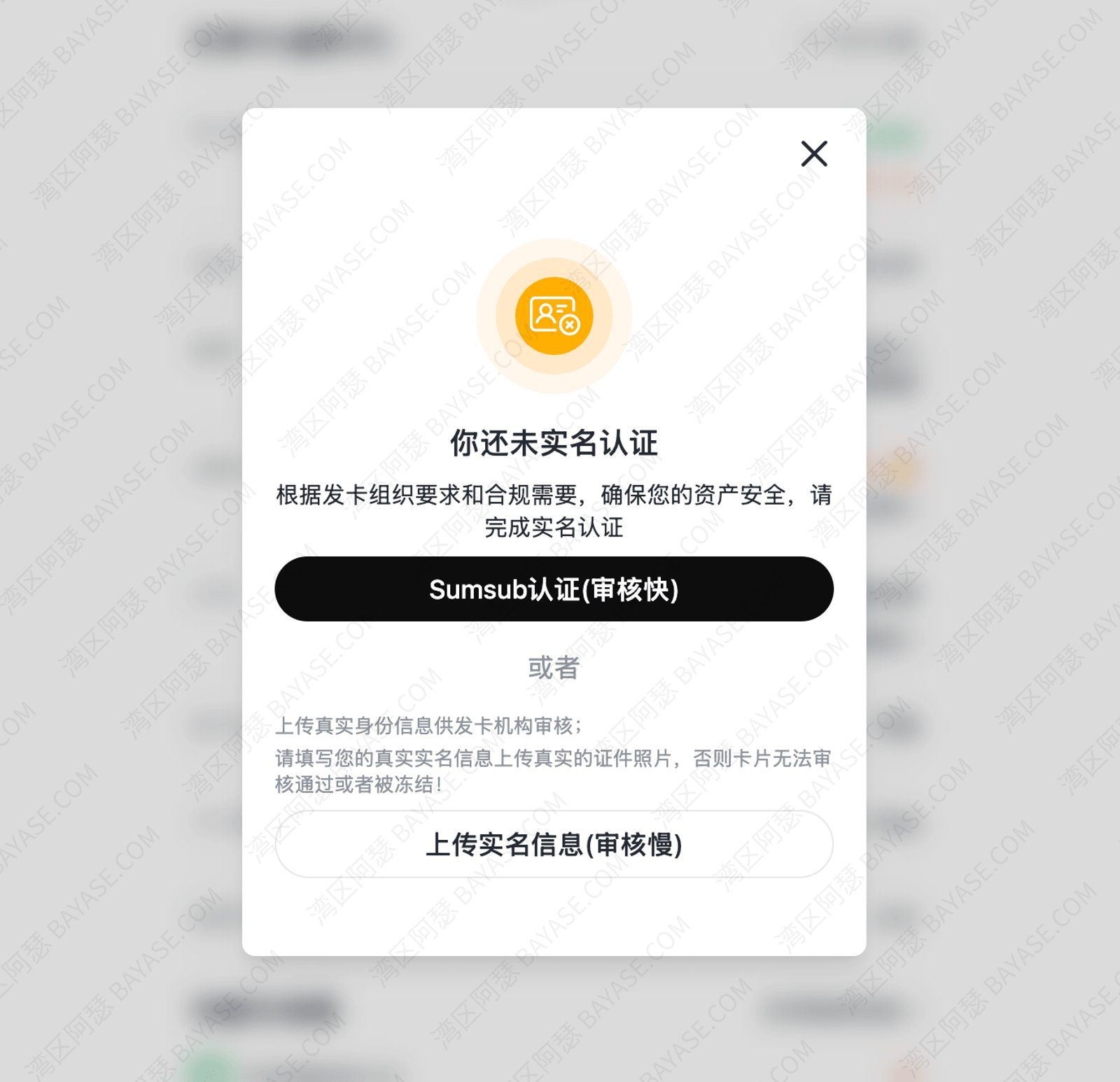
Many people are resistant to KYC (Know Your Customer) processes, but for payment products like this, it’s actually more common for users to be willing to complete the verification than for platforms that don’t offer it at all. If you need to view your card details, use the service on a long-term basis, or deal with risk management issues in the future, having completed the real-name verification will be essential.
Here are some general recommendations:
- Make sure the photos of your identification documents are as clear as possible.
- Fill in your name, date of birth, and other information with your actual details.
- Maintain a stable internet connection; avoid switching between different networks frequently.
By following these steps, you can avoid having to go through extra procedures later on.
Step 3: Recharge USDT
After completing the KYC (Know Your Customer) process, you can proceed with the recharge. The most important thing here is not how much you recharge, but rather the following three items that must be verified carefully:
- Currency
- Chain
- Recharge status
When making your first transfer, it is always the safest to start with a small amount as a test. If you choose the wrong network, the wrong chain, or the currency is not correctly identified, the issue may not just be a bit troublesome; it could result in the funds being irretrievable.
Step 4: Select the card type and apply for the card
Once the payment has been made, go to the card application page to view the available card types and the promotional details. The information that many people are most interested in, such as “0 application fee,” “0 fee for new users,” and “1 USD cashback upon card application,” can usually be found at this step.
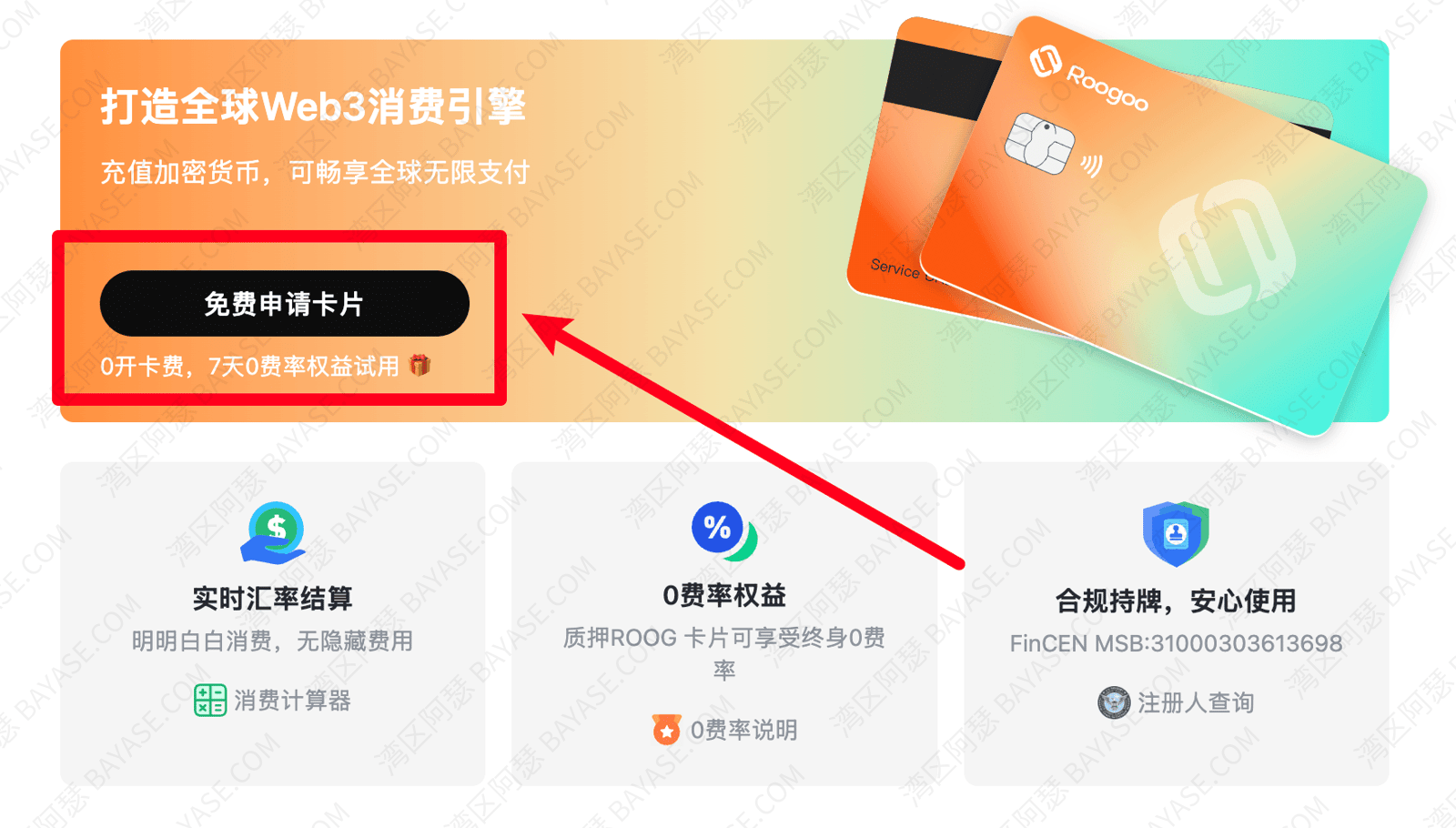
If your goal is to subscribe to AI services, consider the Premium Card or the Enjoy Card as your first choice. Don’t just choose a card based on the seemingly lower fee; make sure it is suitable for your needs with OpenAI/Claude.
Step 5: Submit the information and wait for review
After selecting the card type, submit the required information according to the page instructions and wait for the review.
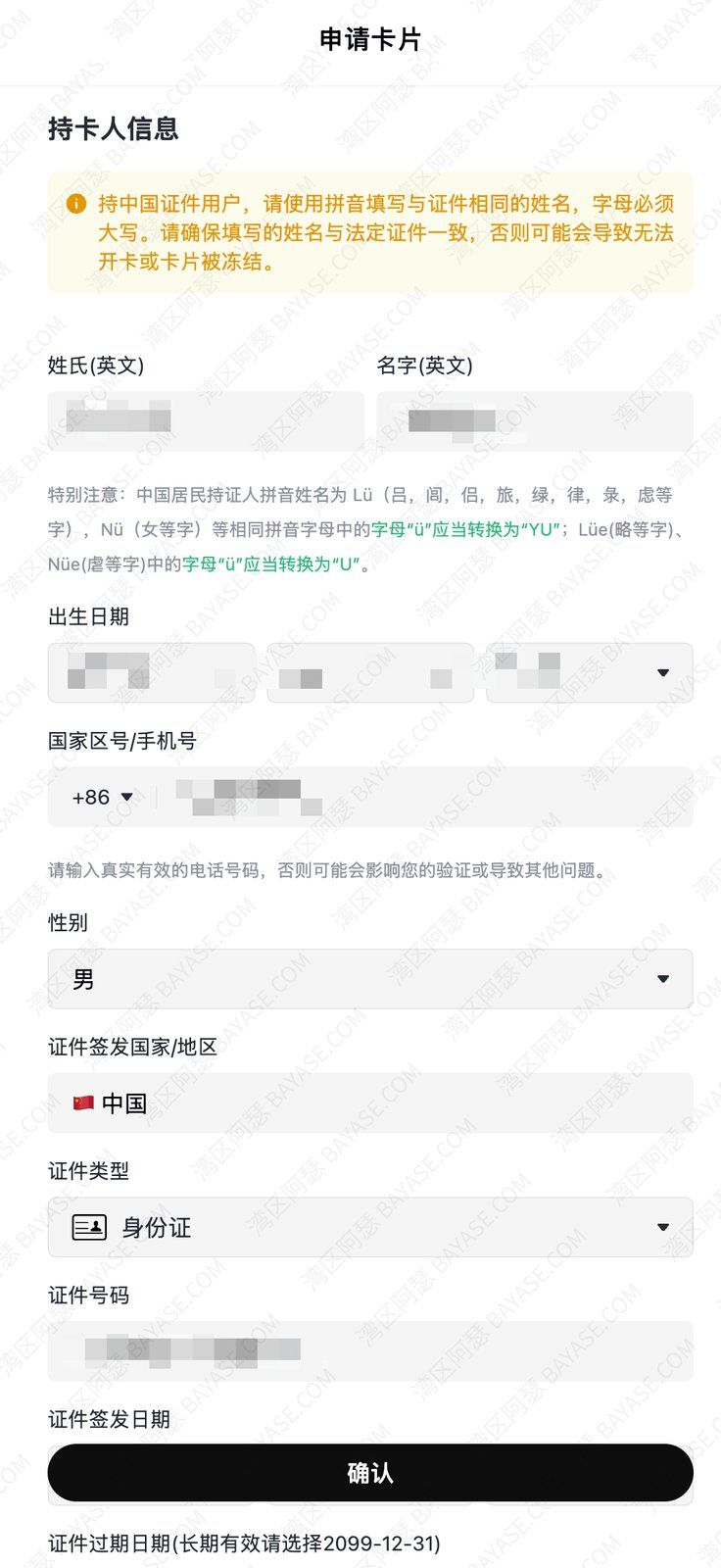
The key to this step is not how fast you submit the information, but rather to ensure that the information is as accurate, complete, and consistent as possible. Many payment-related reviews get stuck not due to system failures, but because the submitted information does not match the requirements or is logically inconsistent.
Step 6: Check the card number and try making a purchase
Once the review is approved, you will be able to access the card page, where the current balance is usually displayed.
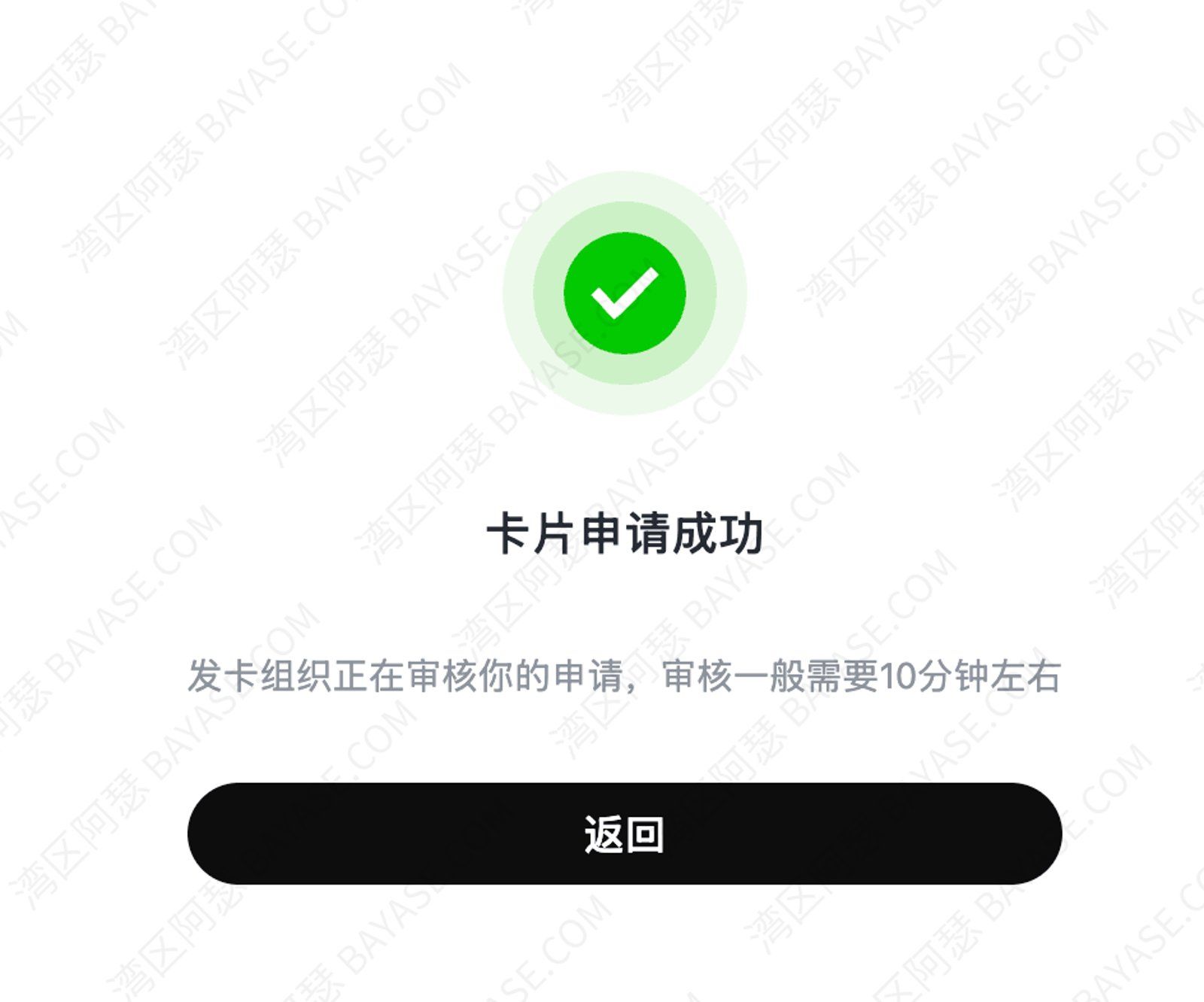
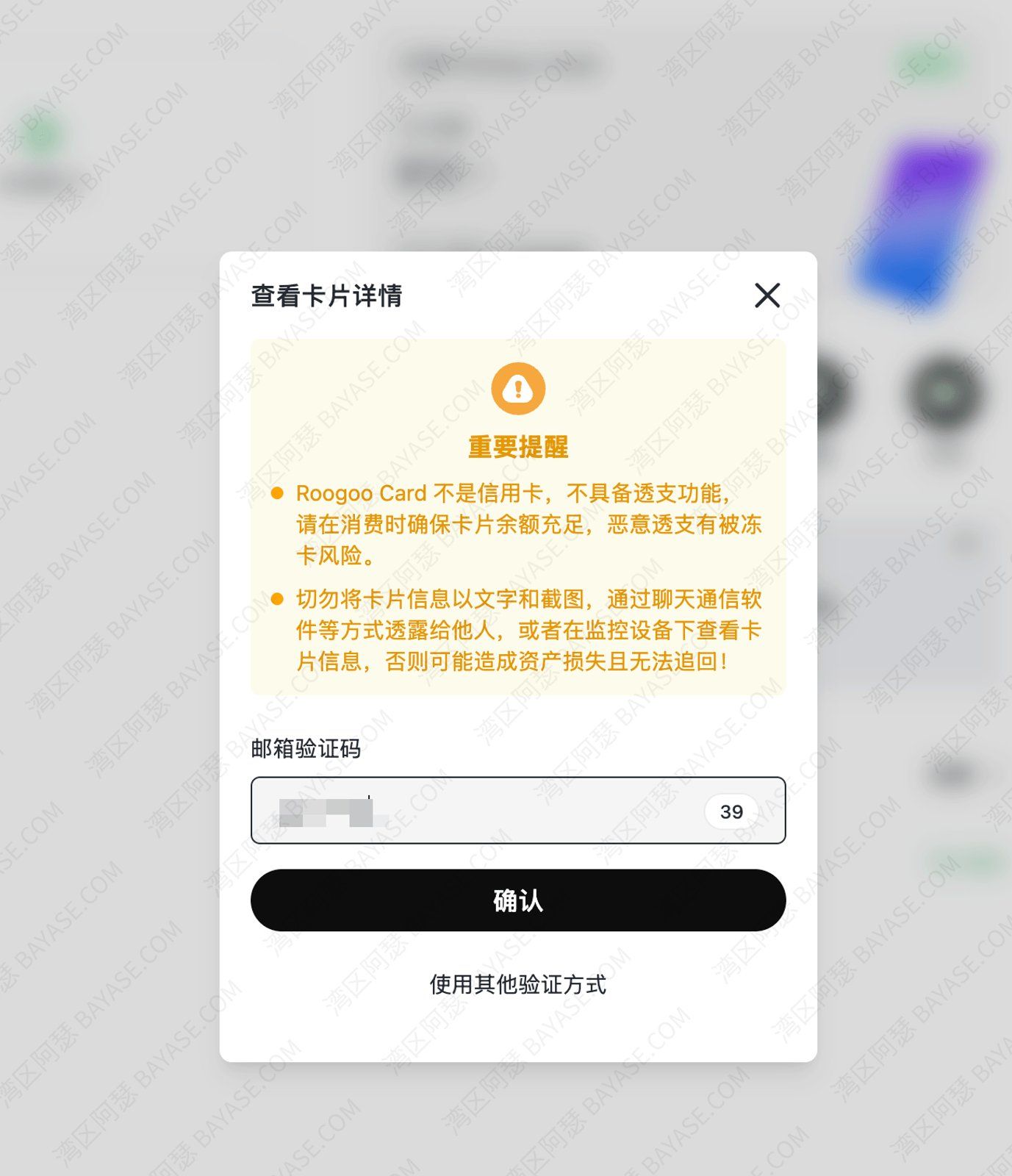
When checking the card number, expiration date, and CVV, you will often need to provide an email verification code for confirmation:
Please be very careful with the following:
- Do not share the full card number and CVV through any messaging tools.
- Do not display them during screen recordings, live broadcasts, or in environments where they could be easily seen by others.
- Do not save screenshots of the virtual card in easily accessible locations for an extended period of time.
Subscribing to ChatGPT, Claude, and Gemini with Roogoo
This is the part that most people are really interested in.
Many people search for questions like “Can Roogoo be used with GPT?” or “Can Roogoo be used with Claude?” The answer is never simply “yes” or “no”; instead, it depends on whether the following four conditions are all met:
- The right type of card is selected.
- There is enough balance on the card.
- The billing address is valid.
- The current network conditions are not too abnormal.
ChatGPT Plus
If you plan to subscribe to ChatGPT Plus, it’s recommended that you prepare the following in advance:
- A type of card suitable for AI subscriptions
- A sufficient balance on the card to cover the monthly fee
- A logically valid billing address
- A stable internet connection
Many failures are not due to the card itself, but rather issues with payment verification, address information, or the payment environment. This is especially true in payment platforms like Stripe, which have strict security measures in place. The card, IP address, billing information, and your payment history all play a role in the approval process.
Claude Pro / Gemini Advanced
The approach for using Claude Pro and Gemini Advanced is similar. You first need to ensure that the type of card you use is suitable, that you have enough balance, and that the payment environment is stable.
If you have already encountered issues with ChatGPT, don’t rush to keep trying with Claude or Gemini. Repeated payment failures can sometimes reduce the chances of success in subsequent attempts.
Pre-Subscription Checklist
Before making the official payment, we recommend you check the following list:
- Have you used an Elite Card or a Enjoy Card?
- Does the balance on your card cover the monthly fee and the verification deduction?
- Are the billing address and postal code correct?
- Is your current internet connection stable?
- Have you experienced multiple failures in a row recently?
What to do if card binding fails or payment is declined
Many people assume their card is damaged when they see the message “Your card has been declined,” but that’s not necessarily the case. The common reasons for a declined payment are usually the following:
- The wrong type of card was selected.
- The card balance is insufficient.
- The billing address or postal code was entered incorrectly.
- There are issues with the current network connection.
- The merchant’s risk management system has triggered a refusal.
- After multiple failed attempts, the system has initiated a more stringent verification process.
A practical order of troubleshooting is as follows:
- First, check if you used a premium card or a special benefit card (e.g., LeXiang card).
- Then, confirm whether the card balance is sufficient to cover the monthly fee and any pre-authorizations.
- Next, verify the billing address and postal code.
- Finally, check for any issues with the network connection or the merchant’s risk management system.
If you have experienced three or more consecutive failures, don’t keep trying forcefully. Take a break and try again later; this usually yields better results.
How to Understand Common Fees
Many people only look at the “0 activation fee,” but the actual cost of use is not limited to that. What you should really pay attention to includes:
- Whether the first card is free
- Whether there is a fee for the second card
- What the regular transaction fees are
- Whether there are cross-border fees for transactions outside of the US dollar area
- Whether there are additional charges for small-value transactions
Therefore, the correct way to understand these fees is:
The first card may offer a low barrier to entry, but the actual costs later on will depend on the type of card you choose and the scenarios in which you use it.
If you only subscribe to AI services occasionally, the cost may not be a big concern for you; however, if you plan to use the service for long-term subscriptions, online shopping, or cross-border transactions, you need to understand the fee structure in advance.
Safety Tips for Using Roogoo and Similar Virtual Cards
The biggest risk with virtual cards like Roogoo is not the difficulty of registering for them, but rather using them carelessly after they have been obtained. Here are some safe practices to follow:
- Recharge only the amount you need and avoid accumulating a large balance over the long term.
- Test the card with a small amount of money on your first recharge.
- Verify the card type, balance, and billing information before subscribing to any service.
- If you encounter consecutive payment failures, stop using the card immediately and investigate the issue; don’t keep submitting payment requests blindly.
- When dealing with the card number and CVV code, avoid recording videos, sharing them in groups, or exposing them in public environments.
If you use the card primarily as a payment tool, the risks will be much lower. However, if you plan to use it as a long-term savings account, it may not be the most suitable option for you.
Summary: Is it still too late to start using Roogoo?
If your need is to manage AI subscriptions and make overseas online payments on your own, it’s not too late to start using Roogoo. While it’s not some “invincible” solution, it is a relatively practical option in the absence of an overseas bank card.
To summarize in one sentence:
Register for a Roogoo account -> Complete the KYC process -> Top up with USDT -> Choose the Premium or Enjoy Card -> Activate the card -> Then link it to ChatGPT / Claude / Gemini.
The unified entry point for using Roogoo is as follows:
- Invitation code:
zd9kgv
Frequently Asked Questions (FAQ)
Q1: How to choose between the Roogoo official website, the app, or the H5 entry point?
You can simply register by using the link provided in this article. In most cases, the web page or the H5 version is sufficient for completing the registration and performing the main functions; it is not necessary to install the app first. The specific entry page will be displayed in real-time according to the platform.
Q2: Is the invitation code mandatory?
If the invitation code is already displayed on the page automatically, you can just leave it as zd9kgv without making any changes. The registration link used throughout this article is:
Q3: How long does it usually take to complete the KYC (Know Your Customer) process?
There is no absolute fixed time for this process; it generally depends on the clarity of the documents, the risk control requirements at the time, and the speed of the system’s review. If the documents are accurate, clear, and consistent throughout, the process will usually go more smoothly.
Q4: How long does it take for USDT to be credited to my account?
It mainly depends on the route you use, the congestion on the blockchain, and the speed at which the platform processes the transactions. It is highly recommended that you start with a small test amount the first time you make a transfer, rather than immediately transferring a large sum of money.
Q5: Is the first card really free of any activation fee?
There are often promotions offering a 0 activation fee for the first card, but whether such a promotion is available, which specific card it applies to, and for how long it lasts, all depend on the information displayed on the page you are viewing.
Q6: What is the 0% fee rate for new users?
This is usually part of a new user promotion, but the applicable time, scope, and types of cards that are eligible may change. It’s best to refer to the platform’s real-time promotion page for the most up-to-date information.
Q7: How do I get the $1 cashback for opening a card?
This is usually also part of the promotional benefits offered. The key approach is not to memorize that cashback is guaranteed, but to first check if the promotion is available on your current page, and then follow the steps required by the platform to claim it.
Q8: Which card is suitable for subscribing to ChatGPT?
We recommend the Premium Card or the Enjoy Card as the first choices. The Unlimited Card is more geared towards general consumption and is not recommended as the preferred option for subscribing to OpenAI/Claude services.
Q9: Is there any way to avoid the KYC process if I don’t want to go through it?
It’s not recommended to use platforms with unknown origins just to avoid the KYC process. For payment-related products, not having any real-name information can actually be more dangerous.
Q10: Will Roogoo disappear or go out of business?
No payment platform can guarantee that “nothing will go wrong” 100%. For users, a more realistic approach to risk management is not to rely on the platform’s permanence, but to control the balance in their cards and avoid leaving large amounts of money in the platform for extended periods of time.
Q11: How to choose among different U cards?
The key factor is still your goals. If you are using the card for AI-related subscriptions, it’s best to opt for cards that are more user-friendly for such scenarios, such as those from OpenAI or Claude. If you are making regular cross-border transactions, you should focus more on the fees, versatility, and the overall payment experience.
Note: This article is a summary of processes and experiences, and it does not constitute investment advice, nor does it guarantee success in obtaining the card, approval, or any specific financial outcomes. Platform activities, fees, supported currencies, card types, and approval requirements may all change. Please refer to the Roogoo page for the most up-to-date information.